Professional FAQ
Questions clinics ask before adoption.
Answers for UK clinicians and clinic teams assessing Mytocel MSK®, with links to the pages that go deeper.
Twelve questions
Setup, evidence, selection, supply.
Each answer uses the same wording as the page it summarises.
Go deeper
What does a clinic need to get started?
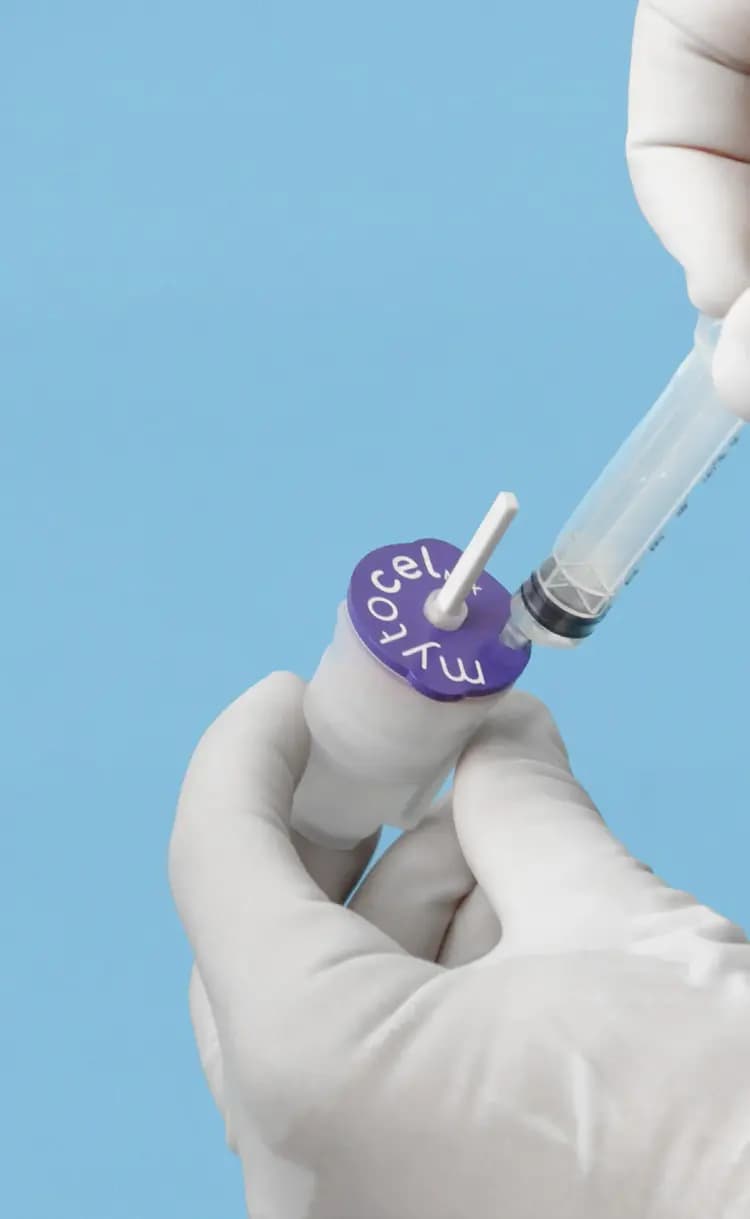
The documented setup is the N4SA processing unit, sterile single-use Rigeneracons® RS devices, protocol training and a defined list of standard clinical consumables: sterile drapes and gloves, antiseptic, local anaesthetic, saline, syringes, needles, a 2.5 mm dermal punch, sterile forceps and dressing materials. Actomed confirms the current UK configuration and availability.
Who leads the service?
A named qualified clinician responsible for case selection, consent, procedure delivery, follow-up and adverse-event governance. Patient selection, consent and follow-up remain with the treating clinician.
What activity should we plan for?
An expected first-quarter case volume helps define equipment and single-use stock requirements. Actomed holds UK stock of Rigeneracons® RS and supports N4SA installation, so configuration follows planned clinic activity.
How will outcomes be recorded?
Actomed provides KOOS and feedback templates for structured local outcome collection. What would strengthen the evidence: a randomised comparison against hyaluronic acid or PRP, larger cohorts, standardised imaging. Actomed supports UK clinics collecting KOOS outcomes to contribute.
Are you supplying in Great Britain or Northern Ireland?
Both. Supply to Great Britain and Northern Ireland, with territory-specific conformity documentation. Different device-market rules apply, so confirm the intended territory during the pricing and onboarding discussion.
What evidence exists?
Nine publications and two preliminary reports: a three-year follow-up series (n = 8), two prospective ten-patient studies to 6 and 12 months, preliminary clinical reports, pre-clinical models and mechanistic characterisation. No randomised controlled trial has been published.
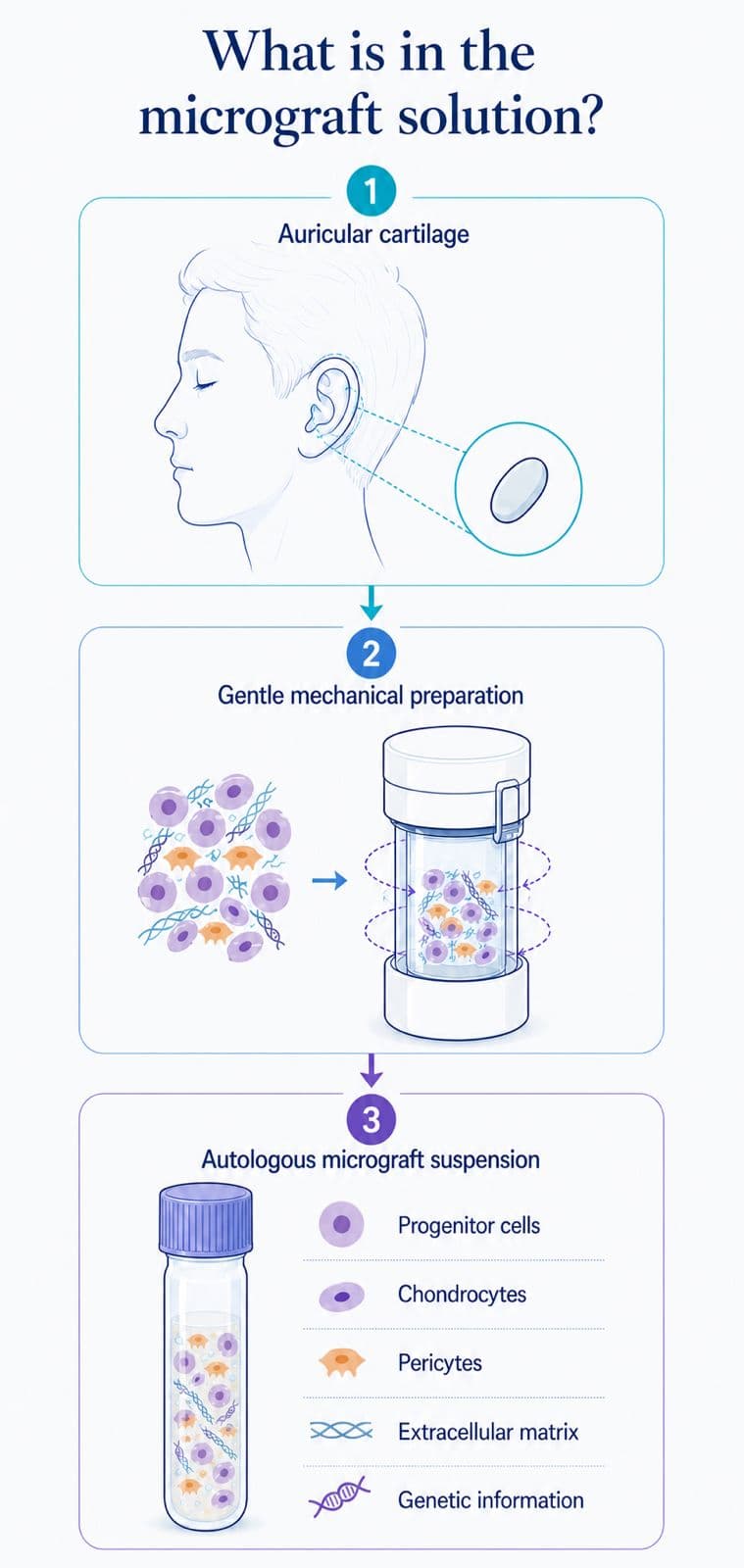
What does the suspension contain?
Characterisation studies describe a heterogeneous suspension of cartilage-derived cells (chondrocytes and progenitor cells), pericytes and extracellular-matrix components from the donor tissue. Mechanical disaggregation only: no laboratory expansion, no enzymatic digestion, no culture step.
Which patients is it documented for?
Manufacturer-documented indications: knee osteoarthritis grade I to III (Kellgren-Lawrence), focal cartilage injury or damage, chondromalacia patellae. Not indicated where articular cartilage is absent (grade IV); the protocol requires that the joint preserves at least part of the articular cartilage. Exclusions include inflammatory rheumatism, morbid obesity, uncontrolled diabetes, severe metabolic disease and corticosteroid or intra-articular injection within the previous 3 months. Full criteria in the professional protocol and the instructions for use.
What did the studies report?
Marcarelli 2021 (n = 8, knee chondropathy grade I to III, uncontrolled): mean Oxford Knee Score improved from 28.4 (SD 6) to 40.8 (SD 6.2) and mean VAS pain from 5.5 (SD 1.6) to 1.8 (SD 0.7) at six months, with benefit reported as maintained at three years. Tsoukas 2023 (n = 10, prospective open-label, early-to-moderate knee OA): KOOS improved at one and six months; the authors call for larger randomised evaluation. Helito 2024 (n = 10, pilot): KOOS, WOMAC and VAS reported over twelve months.1
What is the safety position?
Autologous and minimally manipulated, so no donor material and no immunological rejection. No serious adverse events were reported in the four published knee series (combined n = 37), and donor sites healed within about a week without sutures. Expected: transient discomfort at the auricular donor site; the usual risks of intra-articular injection including local inflammation, pain and, rarely, infection.2134
How does supply work?
Actomed is the exclusive UK supplier of Mytocel MSK, holding stock of Rigeneracons® RS and supporting N4SA installation. Supply to Great Britain and Northern Ireland, with territory-specific conformity documentation. Consumables are reordered from Actomed.
What training is provided?
Structured onboarding: protocol training, equipment orientation, first-case support and a documented consumables list. The current instructions for use, the professional protocol and formal training take precedence over any website orientation.
References
- 1.Marcarelli M, Zappia M, Rissolio L, et al. Cartilage micrografts as a novel non-invasive and non-arthroscopic autograft procedure for knee chondropathy: three-year follow-up. J Clin Med. 2021;10(2):322. View source
- 2.Dorta Fernández A, Baroni Luengo A, et al. Biostimulation of knee cartilage using autologous micrografts. Rehabilitation Science. 2018;3(1). Reproduced in the Mytocel MSK scientific studies booklet, p. 43. View source
- 3.Tsoukas D, Muntean I, Simos C, Sabido-Vera R. Prospective observational study of a non-arthroscopic autologous cartilage micrografting technology for knee osteoarthritis. Bioengineering. 2023;10(11):1294. View source
- 4.Helito CP, Pessei V, Zaniboni C, Muntean I, et al. Efficacy of autologous micrografting technology in managing osteoarthritis pain: a pilot study. Bioengineering. 2024;11(11):1119. View source
Next step
Ask the question that is not here.
Put it in a pricing request or arrange an introduction. Actomed answers professional enquiries directly.